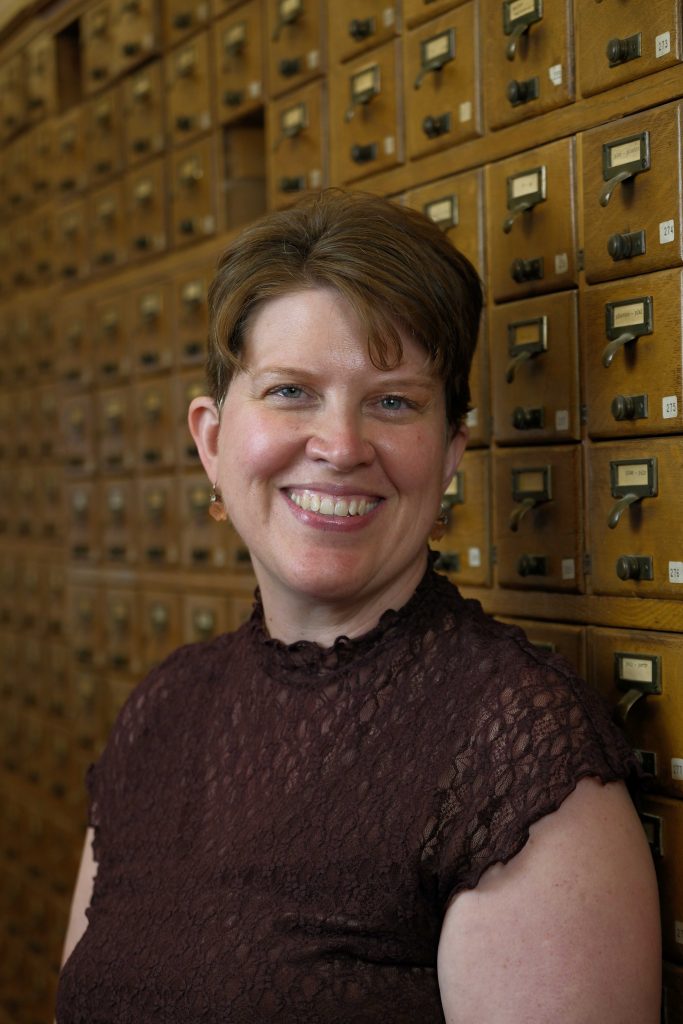


Chris Prom, Coordinator of Sponsored Research Development, has been awarded a $299,845 National Leadership Grant from the Institute of Museum and Library Services (IMLS). The National Leadership Grants for Libraries Program supports projects that develop, enhance, or adapt replicable practices, programs, models, or tools to strengthen library and archival services for the American public.
Prom will lead the project Email Archiving in PDF: From Prototype to Implementation. The grant fosters the full development of open-source tools that encode and make email messages viewable under the requirements of the EA-PDF 1.0 standard, developed in a prior phase of the project. These tools will allow businesses, non-profits, governments, and private individuals to easily create, share, and preserve emails. Using these software tools, email can be converted to PDF in a manner that preserves the original messages’ fidelity, functionality, and their relationships to other messages in a platform-independent format.
The full objectives of this project are to commission case studies to inform tool development, to develop open-source software for creating and viewing EA-PDF files; to implement software libraries supporting file generation and access; to establish interoperability with common email storage systems and applications; to develop validation tools to ensure file compliance and authenticity; and to update the EA-PDF standard.
“This grant will give archives and libraries—as well as businesses and everyday people—a much-needed tool to preserve email correspondence,” said Prom. “Support from IMLS brings this deeply needed format standard one step closer to fruition.”
Prom also noted that the open-source software that Illinois and our partners are developing will make it much easier for businesses, non-profits, and governments to produce and archive email. “We’re particularly happy about the connections this project is building in the PDF industry, through our partnership with the non-profit PDF Association, a trade group. That connection provides tangible reason to believe that the tools we develop can be integrated into software people use daily, such as email programs and PDF viewers.”