Once uncommon in the Midwest, deer ticks, American dog ticks, lone star ticks, and others are now found across Illinois, and tick-borne diseases such as Lyme disease, Rocky Mountain spotted fever, anaplasmosis, and babesiosis are on the rise. Cases of alpha-gal syndrome, a red meat allergy, have also increased. Those who spend a lot of time outdoors, either for work or recreation, have a higher risk of being bitten.
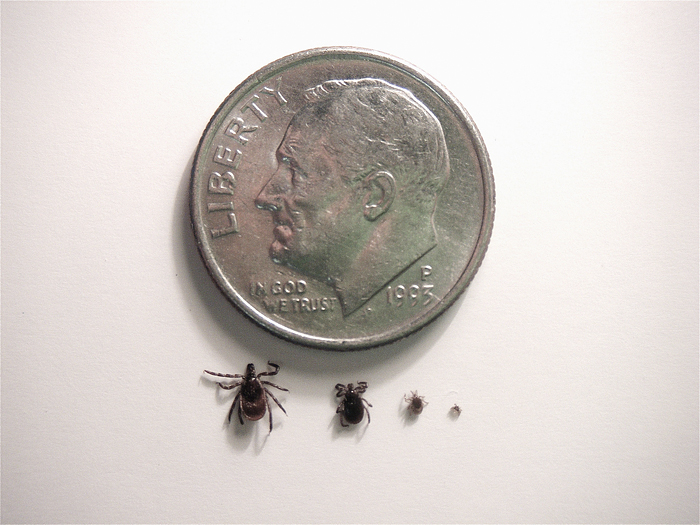
Lyme disease tick at different stages. Photo credit: Wildlife Veterinary Epidemiology Laboratory – INHS
URBANA, Ill. — A call, email, or visit to the local University of Illinois Extension office can help provide some peace of mind. New research from a multi-department team of university scientists explored the role Illinois Extension has in educating communities about ticks and preventing risky encounters.
Read the whole story by Illinois Extension | UIUC here.
Ph.D. candidate Sulagna Chakraborty, center, led a study of farmer awareness of ticks and tick-borne diseases with U. of I. pathobiology professor Rebecca Smith, left, and Illinois Natural History Survey wildlife veterinary epidemiologist Nohra Mateus-Pinilla. Photo by Fred Zwicky
CHAMPAIGN, lL. – Tick-borne illnesses like ehrlichiosis, Lyme disease and Rocky Mountain spotted fever are on the rise in Illinois, and outdoor workers like farmers are at higher risk than those who spend more time indoors. University of Illinois Urbana-Champaign Ph.D. candidate Sulagna Chakraborty and her colleagues at Illinois led a new study on the subject that surveyed 50 Illinois farmers to learn about their awareness of the problem and engagement in tick-prevention efforts. Chakraborty spoke to News Bureaulife sciences editor Diana Yates about what they found.
Read the whole story by the University of Illinois News Bureau here.