Routes of exposure: humans can become infected accidentally through the skin while handling infected animals, if bitten by infected vectors, consuming contaminated food or water, or by inhaling dust or aerosols contaminated with F. tularensis bacteria.
CHAMPAIGN, IL – Tularemia is a zoonotic disease that has recently re-emerged in parts of Illinois. Here’s an overview of this bacterial disease, along with tips on how to empower yourself to safely enjoy your outdoor adventures and protect your dogs and cats.
Read the whole story in the Illinois Outdoor Journal here.
The study published in the journal “Ecotoxicology and Environmental Safety” found high concentrations of chemical compounds in the livers of 23 otters in central Illinois.
“Thus otters serve as biomonitors — organisms that contain information on the quantitative and qualitative aspects of the environment — of wildlife exposure,” according to a new study. They also serve as biomonitors for human health because the same toxic chemicals found in otters have also been found in people who eat contaminated fish.
Estimated use of dieldrin. Graphic: Samantha Carpenter, Illinois Natural History Survey, University of Illinois, Urbana-Champaign
“there are specific watersheds that are areas of concern — not only for otters — for any of the wildlife species that are living in those places, especially those at the top of the food chain.”
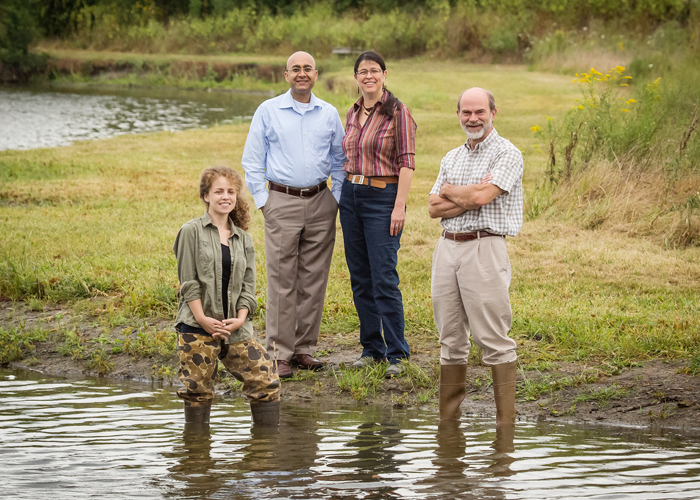
from left – Samantha Carpenter, wildlife technical assistant; Kuldeep Singh, Clinical Assistant Professor, Veterinary Diagnostic Laboratory, Clinical Assistant Professor, Pathobiology ; Nohra Mateus-Pinilla, Wildlife Veterinary Epidemiologist INHS ; and Jan Novakofski, Associate Vice Chancellor for Research for Compliance, Professor of Animal Sciences, Professor of Nutritional Sciences. Photo by L. Brian Stauffer.
CHAMPAIGN, IL. – Researchers report that river otters in Central Illinois are being exposed to polychlorinated biphenyls (PCBs) and pesticides that were banned in the U.S. in the 1970s and ’80s.
Read the whole story by the University of Illinois News Bureauhere.