

 Bio:
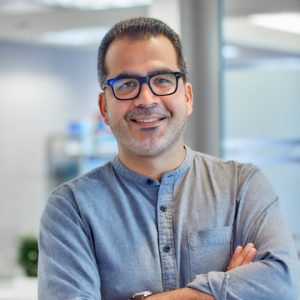
Deepak Lamba-Nieves is the research director & Churchill G. Carey, Jr. Chair in Economic Development Research at the Center for a New Economy (CNE). He also teaches at the University of Puerto Rico’s Graduate School of Planning. Lamba-Nieves has been researching Puerto Rico’s socioeconomic prospects and development trajectories for two decades. At present, he is conducting research on postdisaster reconstruction as part of CNE’s Blueprint Initiative, a collective effort that aims to define a path forward for housing and land use in Puerto Rico. His current book project, based on dissertation fieldwork carried out in the Dominican Republic and the United States, examines collective grassroots projects carried out by migrants and their counterparts back home as a window into how community development takes place across borders. Lamba-Nieves was a postdoctoral fellow at Brown University’s Watson Institute for International and Public Affairs and completed a PhD in urban and regional studies at the Massachusetts Institute of Technology’s Department of Urban Studies and Planning.
Abstract
“Living with Risk in Puerto Rico: Disasters, Planning and the Hazards of Colonial Experimentation”
In this talk, I critically analyze terms like “risk” and “resilience”, through numerous planning and related literatures as a point of departure for a more detailed examination of the intersections between colonial experimentation and post disaster recovery.
As a colony of the United States, Puerto Rico has been the site of several governance experiments carried out by the Federal authorities through legal provisions unilaterally passed and implemented by the US Congress. My remarks will expand the discussions on colonial experimentation through an in-depth examination of the federal rules and programs for post hurricane reconstruction and the neoliberal adjustment policies that are currently being deployed in Puerto Rico. In addition, I explore, through historical examples, how planning, and a distinct planning mentality has played a fundamental role in this long experimental tradition. I will also explain how the simultaneous deployment of austerity initiatives and a massive reconstruction effort— a unique situation with few or no parallels—is generating new challenges for planning and increasing vulnerabilities in the midst of mounting disasters. Interestingly, these critical issues are rendered invisible through the strategic use of ideas like “resilience planning” and “risk management”. My analysis also sheds light on how the recent strings of disasters have become a “visceral catalyst” for several grassroots communities, which are responding and collectively building a community-driven recovery infrastructure that ensures that the historically marginalized and most vulnerable are treated with dignity and are also empowered politically.
Suggested Readings and Viewings:
Lapp, Michael. “The rise and fall of Puerto Rico as a social laboratory, 1945–1965.” Social Science History 19, no. 2 (1995): 169-199.
Bonilla, Yarimar. (2020). The coloniality of disaster: Race, empire, and the temporal logics of emergency in Puerto Rico, USA. Political geography, 78, 102181.
Melendez,Edwin&Venator-Santiago,Charles.(2018).PuertoRicoPost-HurricaneMaria:OriginsandConsequencesofaCrisis.JournaloftheCenterforPuertoRicanStudies.Vo.30,No.3.
Torruella, Juan R. “Why Puerto Rico does not need further experimentation with its future: A reply to the notion of territorial federalism.” Harv. L. Rev. F. 131 (2017): 65. https://harvardlawreview.org/wp-content/uploads/2018/01/vol131_Torruella.pdf