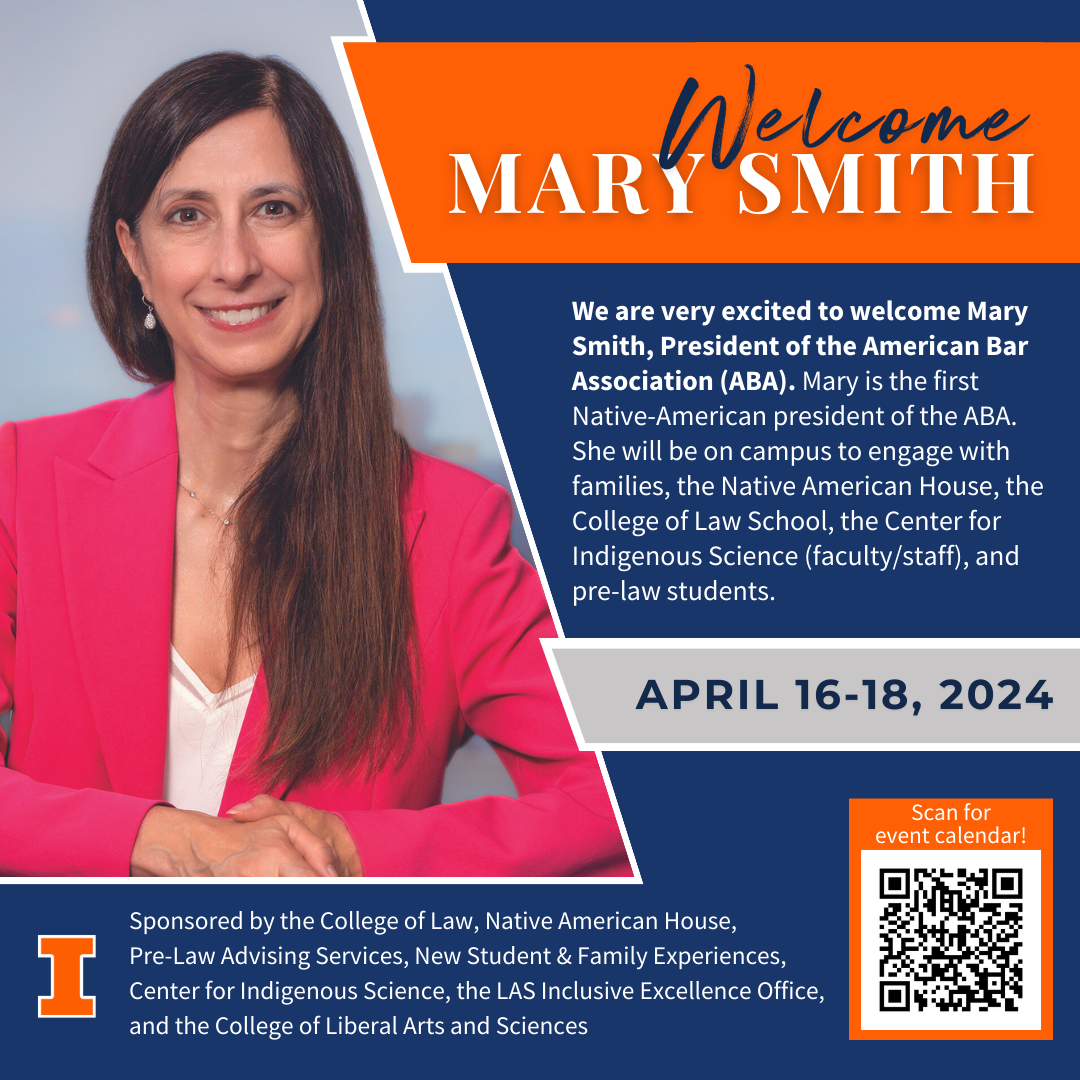
In April, the American Bar Association (ABA) President, Mary Smith, will visit campus. This is an exciting and unique opportunity for students, faculty, and staff to connect with a national leader in the legal profession. In honor of Ms. Smith’s visit let’s take some time to learn more about the American Bar Association and why it is important to the U.S. legal system and the legal profession!
To learn more about unique opportunities for pre-law students to engage with Ms. Smith during her visit, click here!
There are a number of upcoming changes related to the LSAT. Below is an update on these upcoming changes. Please note that we will continue to update this post as additional information is released.
Congratulations! You are nearly there – the beginning of semester break and the holiday season is almost here. Below are some quick tips and recommendations as you finish up the last day of the semester and 2023 year!
October is here and that means recruitment events, LSATs, application drafting, and more! As the admission cycle continues in full swing, we wanted to provide some tips and reminders for this month for all our UIUC applicants!
Constitution Day is an annual celebration of the signing of the United States Constitution on September 17, 1787. Read below to learn some fun facts about the Constitution!
Welcome to our pre-application tip series. July marks an important point in pre-application preparations. By July, many applicants have either recently sat for the 1st LSAT or will be doing so in the upcoming weeks while also taking other active steps to prepare for the upcoming application cycle. To assist in your efforts, below are a few tips and recommendations for this phase of the pre-application series.
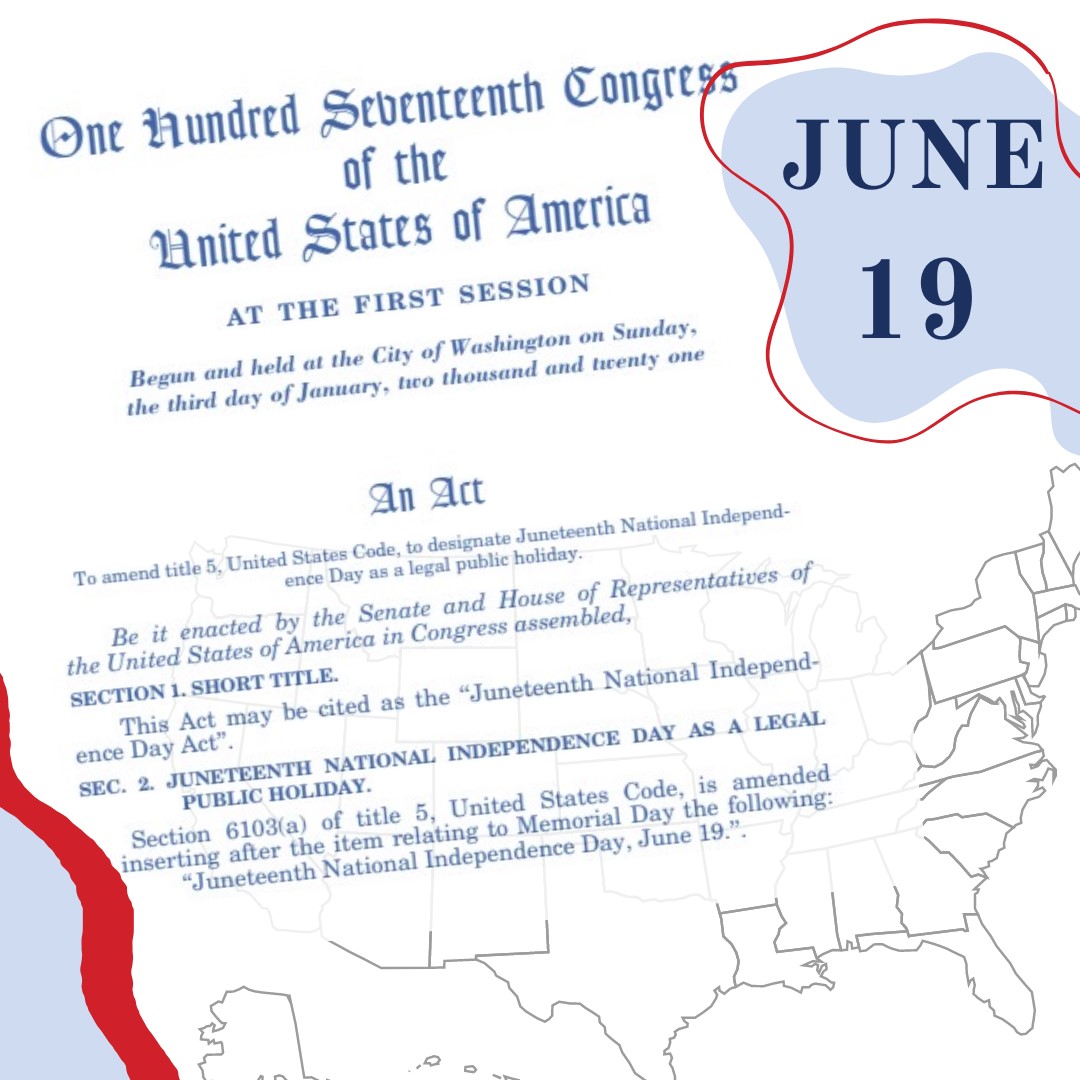
In honor of our newest U.S. federal holiday, Juneteenth, we’d like to recognize some of the immeasurable contributions of African American lawyers, judges, and lawmakers.
Unfortunately, the time between graduation and law school is often referred to as “gap years”. This term often invites an impression that this time lacks substance, is unintentional or is void of value. Perhaps, as a result, many students have an inaccurate impression that taking time prior to law school is inherently negative or a disadvantage to their ultimate goal of attending law school. The reality is that taking time to pursue opportunities prior to law school can contribute significantly to an applicant’s success, and can ultimately offer an individual tremendous benefits personally, academically, and professionally.
Whether you ultimately decide to pursue an opportunity prior to law or go “straight through”, every future applicant should consider how a timeline that includes a “gap year(s)” might enhance their application and contribute to their ultimate success as a law student!
Below is a collection of resources to assist in your decision-making!
View this brief virtual workshop discussing Gap Years!
Learn more about the many benefits of taking a gap year and possible opportunities to pursue!
Watch!Gap Year PerspectivesPanel
PLAS welcomed a panel of UIUC pre-law alumni to share perspectives and insights about their experiences taking time to pursue opportunities prior to law school. The Gap Year Perspectives Panel was hosted on Tuesday, November 15, 2022, at 5:30 pm via Zoom. To register for this event, please click here. Learn more about our accomplished groups of panelists below!
“By taking these gap years and finding what makes me happy in life, I was able to figure out how to intertwine that with my passion for the law, (hopefully) setting me up to have a career after law school that I can be proud and happy with.”
Haydn Lambert ’19
“I wanted to get a better sense of what the world was like outside of school so that my time in law school would be more informed by experience.”
Skylar Rolle ’20
“I wanted to make sure that law school was the right choice for me. In addition, I wanted to take the chance to work in politics so that I could go into law school with some real-world experiences.”
Matthew Krauter ’22
“I wanted to have the opportunity to make a real impact with my undergraduate education and be able to navigate law school admissions better and position myself for success.”
We are reaching that point in the cycle where many applicants are moving into the final stages of preparing their applications. Whether you are looking to apply in a few weeks, or later this application cycle, below are some helpful tips based on actual applicant experiences to assist in your final preparations!
DO:
1. Follow all directions closely!When asked for their best advice, we routinely hear law admissions deans say “follow the application directions” as their #1 tip. Follow the application directions as written and provided – full stop!
Example: if the personal statement page limit is 2, don’t submit a 2.5 page document and assume they won’t mind – even if it is well written.
Each application may have slightly different criteria or directions, it is important to confirm specifics for each school.
2.Triple-checkmentioned school names in essays to match the school you’re submitting the individual application to.If you choose/are required to individualize documents for each individual school based on their directions (see above) – be sure to confirm you have submitted the right draft to the right school. This mistake really happens…every year.
3. Choose recommenders wisely.Those with whom you have a strong relationship and will write about specific experiences and qualities will be most effective.
4. Use your resources! There are many resources to help you succeed in this process. Be sure to utilize the PLAS Office! Whether we help you directly or connect you with the necessary resources – we are here to help!
5. Explore a wide variety of schools. You may be surprised at what you find! Be sure to check out the Researching Law Schools blog post for tips on identifying schools!
Be sure to attend a law fair and meetings with schools – there is an LSAC Digital Forum occurring on November 19!
6. Get Organized! Create a spreadsheet, google doc, or other means to organize your information and track your application tasks. PLAS has put together an Excel spreadsheet that you can use to get started. To see the example, click here.
Don’t forget about your email! Set up folders to organize communications as you receive them!
7. Apply to a range of schools where you feel your LSAT/GPA are very competitive, competitive, and less competitive (some may refer to this as safety, target, and reach schools). This will open up the most opportunities for admission and potential scholarships, it will also help provide as much choice in the admission process as possible.
DON’T:
1. Forget to proofread all your application materials. Be sure to plan time to give every application a comprehensive and thorough review before submitting.
2. Skip directions.Yes – it’s so important we’ve included it on our list twice!
3. Submit applicationsto law schools that you do not see yourself attending. Every school you apply to will not necessarily satisfy your goals/wish list to equal measure as another. However, don’t waste your energy or time with options that you know you will not pursue. Instead, look for a better-fitting option that meets at least some of your most important goals and that you could see yourself attending.
4. Write optional statements/addendums that 1. don’t apply to your personal situation; or, 2. that you feel compelled to write simply to “add more” to your application. Only include addendums where required, relevant, and that add new, substantive information. Doing “more” can take away from your application if it doesn’t contribute something relevant, meaningful, or helpful!
5. Apply late without a strategy. Most law schools admit students on a rolling basis with final deadlines in the spring semester. You should balance carefully having a strong application with the submission timing of your application. Sometimes applying a bit later in the cycle can result in submitting a superior application overall, however, if you will be submitting after December you do want to take timing into account and adjust your strategy.
Be sure to attend the PLAS “Strategies for Spring Application Success” workshop which provides helpful information and strategies for submitting applications from January to spring.
6. Put all your eggs in one, super competitive, basket! In other words, don’t apply only to schools where acceptance rates are low or where you are at the low end of their GPA and LSAT ranges.
7. Lose touch! You should be making connections with schools throughout the application process, both before and after you apply. This will help you gather important information and perspectives to assist you with final decisions and also in creating more opportunities for you to leave a positive impression with schools. Be sure to make time for programs, events, and visits (virtual and in-person) at the schools you are applying to!
Stay Tuned! We will have great programming upcoming this winter and spring to help you navigate the post-application process!
Meet with a pre-law advisor…
The Pre-Law Advising Office is designed to help you achieve success in your goal of attending law school (seriously – it’s kind of the reason for our existence…). Whether you are a senior Illini or an alum planning to continue your education in law school, we are anxious to meet with you!
It’s time to get excited for Spring courses! Each semester we receive many questions from pre-law students regarding courses helpful in preparation for law school in advance of course registration. To assist in this process, Pre-Law Advising has made a helpful chart with suggested classes pre-law students might find useful and interesting in planning and exploring a legal education.
In general, students interested in going to law school should take classes that focus on analytical and critical thinking, communication, research and writing, and when possible – legal topics of interest. The recommended course list includes classes from many different disciplines that might serve one, or more, of these goals. Take a look at the chart to find courses that are both interesting to you and will help build the necessary skills for law school.
Click Here for the list of Spring 2023 Recommended courses!
Please keep in mind that this list should not be viewed as exhaustive as there are many beneficial courses offered each semester. This list should be used to highlight courses of particular interest and give a broad overview of options.
NEW for Spring 2023:Internship Opportunity! Law 199 – Tolerance Means DialogueInternship | For more information, view the flyer here or visit the website here. For questions, please email Prof. Wilson (wils@illinois.edu) and CC Roxana Madani (rmadan3@illinois.edu).
Want to learn more?
See what fellow Class of 2023 Illini say are some of their favorite pre-law related courses at Illinois…
Justin Davis
Justinis currently the Class of 2023 Representative of the PLAS Advisory Council and president of UIUC Accounting Club. He shared the following perspectives on his favorite pre-law related courses…
PHIL 102 – Logic and Reasoning– It was a great introduction to applying critical thinking to a text and then writing down your analysis.
BADM 300 – The Legal Environment of Business – This was my first perspective on what laws apply to corporations. It also provided a glimpse into liability, constitutional law, and the hierarchy of federal vs state laws.
Jack McNabb
Jack is currently a pre-law student of the Class of 2023, studying Sociology and Business & Informatics. Here are his perspectives on his list of favorite pre-law related courses…
SOC 364 – Impacts of Globalization – Professor Dill is my other favorite professor at Illinois and his globalization class combined economic and sociology theory to explain globalization trends throughout the world. This course was also reading and discussion intensive.
BADM 340 – Ethical Dilemmas of Business – I am currently taking this course and I have enjoyed it thus far. As the name states, this course explores some at large ethical issues facing the current business world and could be valuable to students interested in business law.
Sruthi Navneetha
Sruthi is currently the At-large Representative of the PLAS Advisory Council, president of Phi Alpha Delta, and president and founder of Women In Law Pre-Law Society. She shared the following perspective on her favorite pre-law related course…
ECON 437 – Game Theory – This can really help with other pre-law-related classes as topics in this class reappear in almost even Political Science class. It also helps people think critically, which is essential to scoring well on the LSAT.
Alex Nevarez
Alex is currently the Class of 2023 Representative of the PLAS Advisory Council, president of Pre-Law Honors Society, and vice-president of Kappa Alpha Pi. These are her favorite pre-law related courses…
PHIL 103 – Logic and Reasoning QR 2 – This is the most important course I have taken because it is directly applicable to the LSAT. In this course, you learn logic, symbolic logic, and essentially a new way of thinking. This new way of thinking is directly applicable on the LSAT as there are two logic sections. Because I had already taken this course when I started LSAT studying the logic sections came easy to me because my brain already had logic thinking background.
PHIL 104 – Intro to Ethics – In this course it is logic, ethics and writing combined. You cover three hot topics and read from philosophers coming from both sides and then you will write a paper on who you believe is right for each topic. The material is extremely in-depth and eye-opening and it aided me in helping me create good and sound arguments. I grew as a thinker and a writer.
James Weigel
James is currently the At-large Representative of the PLAS Advisory Council studying Aerospace Engineering with a Political Science minor. He shared the following perspective on his favorite pre-law related course…
PS 370 – Justice in the Law – In this class, students work through supreme court cases and brief them. The brief style has a heavy emphasis on legal reasoning and other skills important for prospective lawyers. The professor (Ben Miller) is one of the best professors that I have ever had and cares deeply about the educational development of his students.
Considering a minor?
Check out this informative video about the Legal Studies Minor, including Q&A with Professor Jennifer Pahre: