Tech Tip: Media Space for Canvas Recordings

For professors at the iSchool, it’s common knowledge that they can record their lectures on Zoom for their students to look over later. There’s hardly a single class we as the Help Desk check in on that doesn’t have some notification warning us that we’re being recorded. Eerie, really…

But what is less well-known is how to use Media Space in order to edit Zoom recordings and embed them into Canvas posts.

We already have a few KnowledgeBase articles about Recording Zoom for MediaSpace and Posting Class Recordings from Media Space on Canvas, but the basics to know is this:

Everyone’s already got a Media Space account. When you record a Zoom Lecture made through your Illinois account to the Cloud, a copy is made on your Media Space that will eventually be deleted after 30 days unless you either set up a private Media Space channel or embed it into Canvas.

Embedding into Canvas is incredibly easy, turns out! When creating posts on Canvas, there is a special icon specifically for Media Space content to be added! It looks like this:

Once you click on this, you can then select the video you want from the list that appears.

That’s about the gist of it! If you’d like more specific directions and help, those KnowledgeBase articles above should furnish you with the necessary information on how to easily edit your uploads through Media Space.

Till next week!

Tech Tip: Using Canvas Text Editor

This one’s for the professors and anyone else running a Canvas course site, especially if you’re having a hard time transferring content from one semester to the other. If you follow our guide, you’ll have one less hurdle to worry about.

Rubric of original semester to next semester, and from external link to internal/course link

Links created by copy+pasting from the address bar are external links, and usually work just fine on Canvas. However, these external links will default to the course page where they were originally taken from. i.e., the course page associated with the initial link. This can complicate updates to or transferring content from those links to new Canvas Course pages for future semesters.

Links that access your Canvas Course page, and are made using the Text Editor’s “Course Links” option are internal/Course links and work better for keeping your Canvas up to date with new semesters and any alterations you might make. These internal links will not be stumped as course pages update from semester to semester.

TL;DR It’s important to use internal/Course links using the Canvas Text Editor Tool when making your Canvas Course Site. If you don’t do this, and instead take the more familiar method of copy+pasting external links from the address bar, those links will lead back to the semester they were originally made in, leaving students scratching their heads as to why the link leads to an unpublished course site that they can’t access.

Tech Tip of the Week: Embedding Pictures in Discussion Posts

Embedding a picture in a Canvas discussion post can be completed in three simple steps. First, make sure the image you want to embed is saved as a jpeg file on your computer. Second, within the discussion post reply, click the image button to add your picture file. Finally, after you add the accompanying text within your post, click the reply button. You can find additional information on using image files in a discussion post in the Canvas Student FAQs.

Tech Tip of the Week: Canvas Mobile Apps

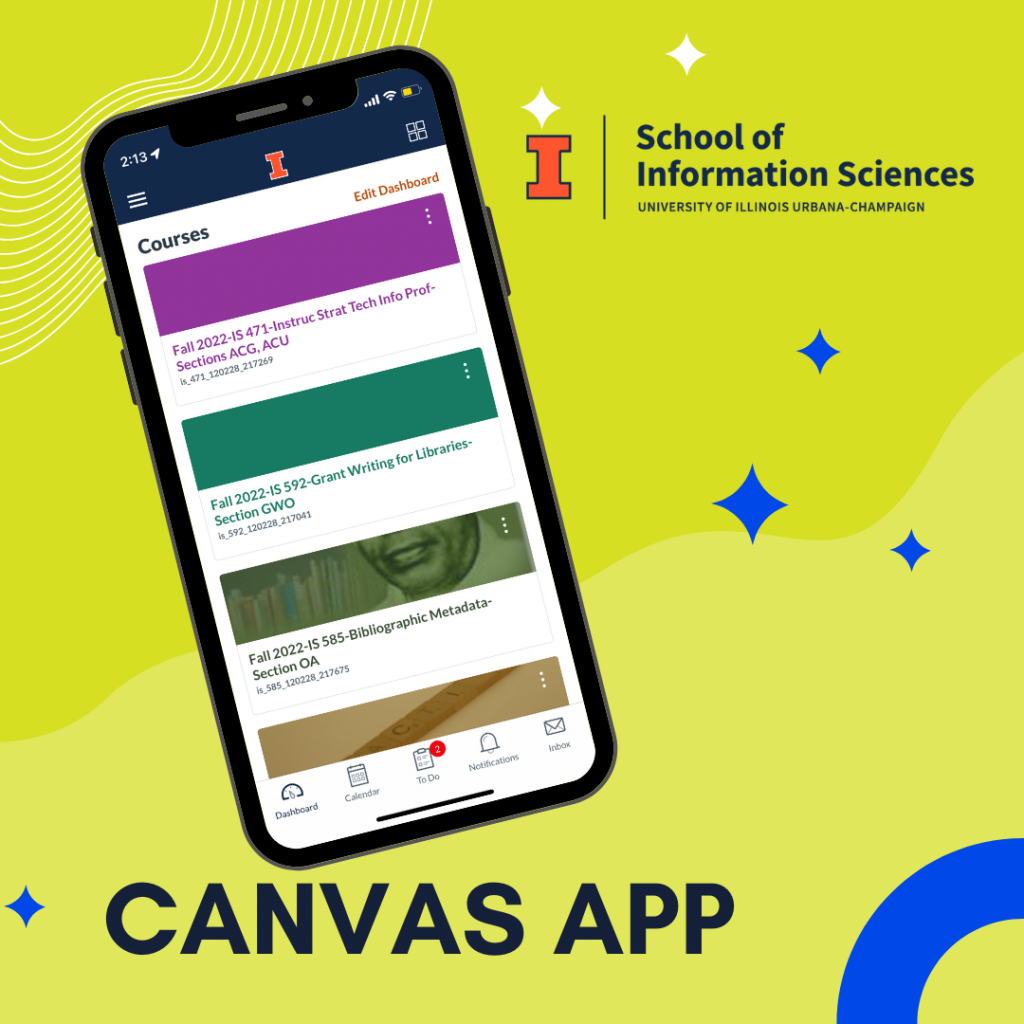
Whether you are an instructor or a student, there may be times that you need to check Canvas away from your computer. You could use a browser on your phone but you know that many functions are not mobile compatible and those that are can still be difficult to navigate. Fortunately, you can download the Canvas Student App or Canvas Teacher App instead. From participating in discussions to seeing or posting grades, the Canvas mobile apps allow users to access their courses easily while on the go.

Tech Tip: Adding a Profile Picture to Canvas

You may have noticed that your profile picture on Canvas is blank, or is the same image as your iCard photo. If you would like to change your Canvas profile photo, follow along this week’s Tech Tip below.

First, have a picture you’d like to use on the device you are using, or be ready to take a picture with a camera.

Log in to your Canvas account, either on a computer, or on a smart device via the Canvas App. Select the profile icon in the left hand bar of Canvas.

It should be at the top of the pillar of icons.

Screenshot with highlights on profile icon in Canvas.
Screenshot with highlight and arrow, directing users to the Profile icon.

Select “Profile” in the menu that appears.

Screenshot with highlight and arrow, directing users to “Profile” button

You should now see a page with your name, a place for your profile picture, and places for other personal information which you may manage separately. You can edit your profile picture by clicking on it. If you have not already placed an image there, Canvas will default to your iCard portrait photo, if you took one.

Screenshot with arrows and highlights on profile picture icon and “Edit Profile” button

Once you have clicked on the circle icon to edit it, you will have the option to “Upload a Picture” from your computers files, or “Take a Picture” using any attached web camera. Select “choose a picture” at the bottom.

Note: You may use any image file type, such as .png or .jpg, or even .gif animated images (although the animation will not carry through to your icon).

Screenshot of menu upon clicking profile picture circle

Upon choosing an image to use, you may then crop the picture using the circular overlay to focus on the picture as you please. Click and drag the cropping circle to focus your profile picture to your taste.

A square image fits the cropping window better.

Hit “Save” at the bottom and you’re good to go.

Note: Immediately after saving the new image as your profile pic, the icon in the profile settings page you’ve been working from may turn white. Try refreshing the page or clicking back to it, allowing the new image to load properly. You may want to double check your new profile picture before moving on, to ensure the cropping and resolution are to your taste.

Additional Resources: For more in-depth directions, see the official Instructure Guide for changing your profile picture on Canvas. The above link from the UIUC Systems Knowledge Base in turn links to the official Canvas Instructure Guide.

Tech Tip: Confirming a Submission in Canvas

Here are some notes taken directly from Instructure’s Canvas guides. The source is listed below if you would like to view the content directly and more in-depth.

Source: https://community.canvaslms.com/t5/Student-Guide/How-do-I-submit-an-online-assignment/ta-p/503

Celebration Animation:
One of the easiest ways to tell if your submission has gone through properly, is to enable the Canvas celebration animation in your profile settings. You can find these settings by logging into Canvas, selecting your profile photo, then the settings item. Scrolling down on the subsequent settings page will reveal the “User settings” under the heading, “Feature Options.” Within the “User settings” there is the option to enable and disable celebration animation. Enabling the celebration animation will allow a burst of digital confetti to display upon submission of an assignment.

The Profile Settings page of Canvas in which you can enable and disable the Celebration Animation in addition to other User Features.
Hovering the cursor over the “State” icon will allow you to select either “enable” or “disable”
There will also be a record of your submission, which should appear in the upper right corner upon submission or refresh.


View Submission:
After you have submitted your work, you will see information in the Sidebar about your submission. For file uploads, the sidebar provides a link to your submission to download if necessary. This should populate immediately, or upon refreshing the page and remain there indefinitely.

Re-Submission:
If you choose, you may resubmit another version of your assignment using the New Attempt button. You will only be able to view the details of your most recent submission in the Sidebar, but your instructor will be able to see all of your submissions.

*When you resubmit an assignment, you can only access and view your most recent submission. However, instructors can view all of your submissions.

Graded Submissions:
Once the instructor has graded your submission, the Grades link in Course Navigation displays a grading indicator.
You can also see details about your assignment and links to additional feedback in your Grades page.


Tech Tip: Canvas App for Students

Before the semester begins, it might useful to know more about your options for using Canvas. While the desktop version of Canvas is ideal for getting work done, the App “Canvas Student” allows you to log-in on the move and check in on announcements and notifications more conveniently.

If you need to, you may also enter your Zoom room from your Canvas Student app, presuming you also already have your Zoom app set up on your phone. (The Zoom app is simple enough to set up; download the app, login w/ SSO using “illinois”and DUO 2FA, and get going with your meetings. The settings for Zoom mobile are definitely worth setting up before trying to attend a meeting.)

You can also mess around with the settings in the Canvas Student app, though they are not as in-depth the desktop settings for Canvas. The app’s settings are more directed towards notifications and display, missing much of the organizational and workflow oriented settings.

For further information regarding Canvas’ Student App, check out these links to the official FAQ,

Logging into the Canvas Student App: https://community.canvaslms.com/t5/Troubleshooting/Logging-into-the-Canvas-Student-App/ta-p/885

Viewing My Courses in the Canvas Student App: https://community.canvaslms.com/t5/Troubleshooting/Viewing-my-courses-in-the-Canvas-Student-app/ta-p/879

Viewing my personal to-do items in the Canvas Student App: https://community.canvaslms.com/t5/Troubleshooting/Viewing-my-personal-to-do-items-in-the-Canvas-Student-app/ta-p/877

Tech Tip of the Week: Bulk Downloading Student Assignment Submissions

Did you know you can bulk download student submissions for assignments? As an instructor, Canvas allows you download all student submissions for an assignment as a single ZIP file.

You can use bulk downloads for multiple submission types, including file uploads, text entries, website URLs, and Google Docs submissions.

Canvas has a whole page dedicated to walking you through bulk downloading assignment submissions here, and if you have any questions, please reach out to the Help Desk!

Tech Tip of the Week: Giving Feedback on the Canvas User Interface

Canvas isn’t always the easiest to navigate, and there may be times where you would like to address certain bugs in Canvas’s interface. The Help Desk can find workarounds where possible, and we are always happy to help answer Canvas questions you may have! While the Help Desk cannot change certain aspects of Canvas, you can still improve Canvas by providing feedback directly to Instructure and adding to already existing conversations within Instructure. Directions and details on how to provide feedback for Canvas via Instructure can be found here.

As always, the Help Desk is here for you, and Canvas related questions are always welcome!