“Speculative Remembrance” to Explore Public Memory and the Story of Breonna Taylor
Alisa Hardy (Communication) was a 2026 HRI Summer Faculty Fellow. During the summer she traveled to Atlanta to view Amy Sherald’s painting Breonna Taylor (2020) and spent focused time writing to develop her forthcoming work, Speculative Remembrance: Beyond Naming Breonna Taylor Across Time, Bodies and Space.
Describe your research. What question or questions are you seeking to answer?
My work examines the public discourse of Black women’s remembrance in the context of anti-Black violence. Speculative Remembrance: Beyond Naming Breonna Taylor Across Time, Bodies and Space traces a contemporary history of Black women’s and girls’ remembrance in the United States. It is the first full-length monograph dedicated to the public memory of Breonna Taylor’s life and death. Breonna Taylor was a young Black woman who worked in health care and was killed by Louisville police in her home in March 2020 during the execution of a search warrant.
Her story gained widespread global recognition alongside Ahmaud Arbery, in the Black Lives Matter movement that followed the murder of George Floyd. Taylor came to represent the experiences of Black women and girls affected by police violence and the urgent need to confront the systemic racism that leaves many vulnerable to harm. My book explores what happens after that public recognition. I am interested in how communities have continued to tell the story of who Taylor was and how they have carried her memory beyond 2020.
What drives your interest in the topic?
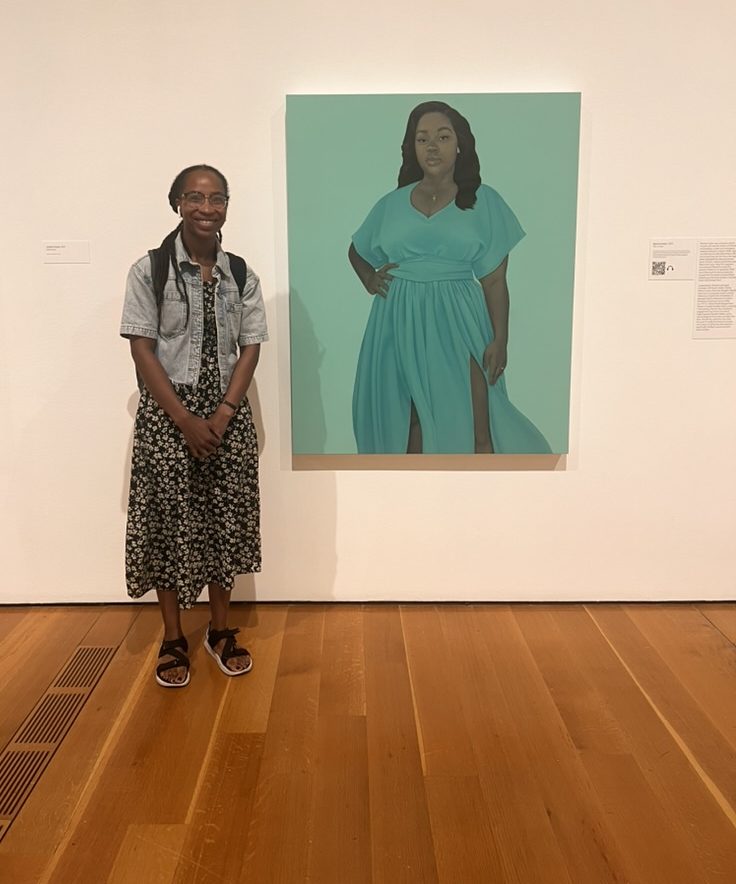
Alisa Hardy at the Sherald exhibition
One question continues to drive this project: What place does Breonna Taylor hold in our shared memory of 2020, and how has her remembrance shaped broader understandings of Black women’s lives within the history of anti-Black violence?
I remember 2020 through a few defining images and events in our society, such as the COVID-19 pandemic, the racial justice protests, and the sudden shift of work and everyday social life onto digital platforms. I want to understand where Breonna Taylor belongs within that history and what changes when we place a Black woman’s life and legacy at the center of our stories. I write this story to connect the history of the pandemic and the history of the racial justice movement in Taylor’s name that transformed public life in 2020.
I am especially interested in what happens as that year recedes. Some stories become part of official history while others fade from our view. Black communities have long responded to this problem by preserving their own histories and telling the past from their own perspectives. My research examines how that work is happening now. When people repost Taylor’s portrait, commemorate her birthday, paint her likeness on a wall, or build a digital memorial in her honor, they are making claims about who deserves to be remembered and what future generations should know about Black life in 2020.
How did the Summer Faculty Fellowship support your work?
With fellowship support, I traveled to Atlanta to see Amy Sherald’s painting Breonna Taylor (2020) in the exhibition Amy Sherald: American Sublime at the High Museum of Art. Seeing the portrait in person was important because one chapter of my book follows the life of this image across different settings. Vanity Fair originally commissioned Sherald to create the portrait for the September 2020 special magazine. The image later circulated widely online and became one of the most recognizable representations of Taylor. I am studying what happens as the portrait travels from a magazine cover to social media and into a museum. Being in the museum allowed me to study details that are difficult to understand through a digital reproduction and helped me think more carefully about what changes when an image people have seen countless times on screens becomes a physical object visitors stand before. The fellowship supported that research trip and gave me valuable writing time to develop the chapter. More broadly, it helped me continue building a book that asks how Breonna Taylor’s story is being carried forward and what her remembrance can teach us about how the history of 2020 will be told.