New Book Cover Design

I am excited to share the cover design (pictured right) for my forthcoming book, titled Digital Equity Ecosystems: How Community Coalitions Reduce Inequality and Strengthen Democracy, which will be published by the University of California Press in 2026.

The description of the book from UC Press is below.

“Digital Equity Ecosystems introduces readers to the groundswell of community coalitions that work to alleviate technological inequity and social injustice. Through a comprehensive review of theories and concepts across the fields of information, communication, technology, and public health studies, Colin Rhinesmith reveals how the digital equity ecosystems framework is essential for addressing urgent digital inequalities. Investigating five original case studies of digital equity ecosystems across the United States, Rhinesmith shows how community coalitions serve as vital infrastructure to tackle digital inequality and strengthen democracy. By focusing on these ecosystems as sites for community engagement, civic participation, and social justice organizing, this book helps us make sense of the current moment, arguing that it is crucial to bridge both the digital divide and other social divides more broadly at a time when democracies are in decline worldwide.”

New Article in Journal of Information Policy

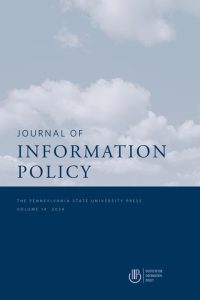
Thrilled to have another journal article published this year, titled “Beyond Access and Infrastructure: Evaluating the Impact of Local Contexts on Digital Equity Strategies Through the Lens of the Digital Opportunities Compass.” The article was co-authored with my wonderful colleagues Dr. Pierrette Renée Dagg, Dr. Megan Knittel, and Joon Oh revised from an earlier version originally presented at The Research Conference on Communications, Information and Internet Policy (TPRC) 2024.

Here is the abstract:

“This article presents a multiple case study of context in shaping local digital equity policies in three communities in Michigan, United States. Few studies have systematically investigated local context to understand its potential impacts on the development of sustainable information policies in rural communities. By applying the Digital Opportunities Compass, a framework for examining contextual factors that impact community-based digital equity programs and policy, the study found that local context can both positively and negatively impact the development of policies and programs. These findings have implications for local and state policymaking, particularly for considering the community assets and invested champions.”

New Article Published in Journal of Participatory Research Methods

Sangha Kang-Le and I have a new peer-reviewed article published in the Journal of Participatory Research Methods. The article, titled “Understanding the Value of a Digital Equity Researcher-Practitioner Collaboration Using Participatory Action Research,” presents an in-depth analysis of the participatory approach we used to produce our (2023) white paper, “Developing a digital equity theory of change with Tech Goes Home” while I was at the Digital Equity Research Center at METRO and Sangha was at Tech Goes Home.

Here’s the abstract from the article:

Digital equity has been defined as a social justice issue. However, there is currently a lack of scholarship that describes how participatory action research (PAR), as a scholar-activist approach, has been used to advance digital equity and social justice through researcher-practitioner collaborations. In response to this gap in the literature, this study presents on an in-depth reflection on how we used PAR in a research project with findings that were previously published in a white paper in 2023. This current paper seeks to respond to the following research question: What is the value of a researcher-practitioner collaboration using PAR to advance digital equity as a social justice issue? To answer this question, we used our project team’s meeting minutes as a source of evidence. More concretely, this thirty-three-page meeting minutes document provided the evidence that we used to respond to the list of thirty-five questions from Cornish et al.’s (2023) six “prompts for designing a PAR project.” This approach provided us with a structured approach to reflect on and articulate the value of using PAR to guide our work together over an eleven-month period. The purpose of this current study is to address a gap in the existing digital equity literature and to more deeply reflect on our collaboration using PAR as a research/practitioner team. As researchers and practitioners working together to advance digital equity, our study found tremendous value in using PAR to create a theory of change, particularly in the context of the current $65 billion investment in universal broadband infrastructure and digital equity in the United States over the next five years, particularly to ensure that those most impacted by the digital divide are represented in solutions to the problems identified by the Infrastructure Investments and Jobs Act of 2021.

iConference 2025 Panel Discussion: 20 Years of The Journal of Community Informatics

I look forward to moderating our iConference 2025 panel discussion, titled “20 Years of The Journal of Community Informatics: The Past, Present, and Future of Putting People First,” at 3:00 p.m. ET on Wednesday, March 19th at Indiana University in Bloomington. The discussion is part of the iSchools Community Informatics Group Community Event and will feature authors who contributed to the 20th Anniversary Special Issue of The Journal of Community Informatics.

The panel will feature the following contributors to the special issue:

  • Ricardo Gomez, Professor, Information School, University of Washington, USA
  • Khalid Hossain, Research Fellow, Faculty of Information Technology, Monash University, Australia
  • Bharat Mehra, Professor & EBSCO Endowed Chair in Social Justice, School of Library and Information Studies, University of Alabama, USA
  • Karen Louise Smith, Associate Professor, Communication, Popular Culture & Film, Brock University, Canada

For more information, please visit the iConference 2025 website.

Presentation to ALA Digital Inclusion Working Group

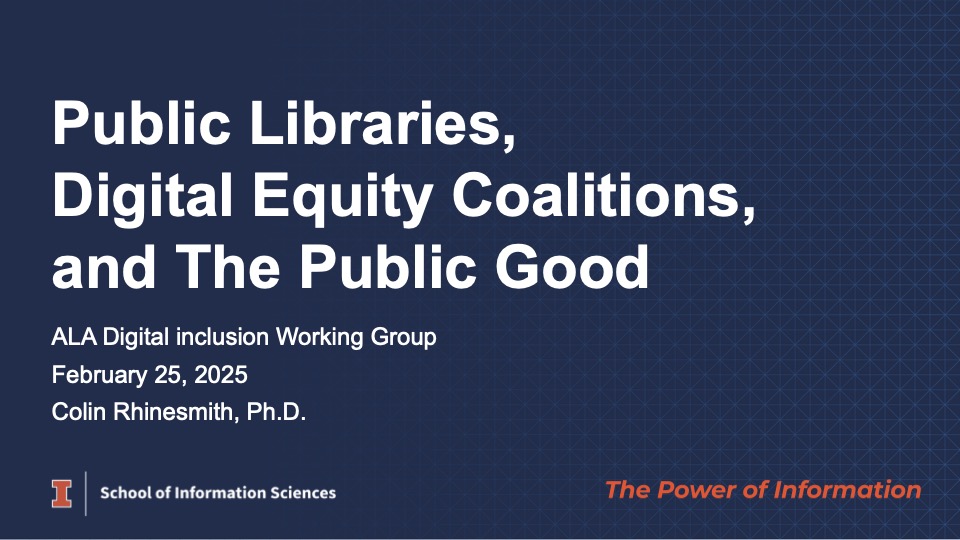
I was invited to join the American Library Association (ALA)’s Digital Inclusion Working Group this week to present findings from my recently published article, titled “Public Libraries, Digital Equity Coalitions, and The Public Good” in Public Library Quarterly. Several participants in the working group participated in the research. While I was able to share early findings from the study directly with those who participated as part of my member checking process, it was wonderful to be able to share the results of the research with the group more broadly.

I uploaded my presentation to IDEALS, and I have included a link in this post below.

Investing in the Human Infrastructure of Broadband

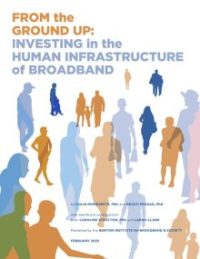
I’m excited to announce that our collaborative final report, co-authored with Dr. Revati Prasad (Benton Institute for Broadband & Society) along with significant contributions from Dr. Caroline Stratton (National Digital inclusion Alliance) and Larra Clark (American Library Association) on the Human Infrastructure of Broadband is out today! The report, titled “From the Ground Up: investing in the Human Infrastructure of Broadband” features findings from our case studies, focus groups, and expert convening with leaders in the broadband and digital equity fields to understand how to sustain this work well into the future.

As we describe on the Benton Institute for Broadband & Society’s website,

“This report looks to the future, bringing together insights from previous research and convenings, to craft recommendations for how we can strengthen and sustain the human infrastructure of broadband.

  • Section I presents our recommendations for how to sustain this work going forward, informed by our research and the policy and expert convenings we conducted.
  • Sections II and III draw on case studies we commissioned and the three expert working groups we convened to present the dynamics of the human infrastructure of broadband at work.
  • We close by reiterating the ongoing, universal need for a human infrastructure of broadband and call on our field to build on the current momentum now.

While we outline potential actions at the national level, we are focused on local and state actions, too.

This report is written for policymakers at all levels of government, philanthropic and nonprofit organizations, and other stakeholders. We look forward to working with project partners and others on implementing the recommendations to sustain the human infrastructure of broadband even after current federal investments have ended.”

Empire State Development Funds Planning and Research For Digital Navigator Services

Southeastern NY Library Resources Council (Southeastern) has received a grant to evaluate its digital navigation services at libraries and community organizations across the Mid-Hudson Region.

The project, led by the Metropolitan New York Library Council (METRO) in collaboration with Dr. Colin Rhinesmith, Visiting Associate Professor in the School of Information Sciences at the University of Illinois Urbana-Champaign, will provide insights to inform the growth of the Digital Navigators of the Hudson Valley service. Since its launch in 2022, the service has trained 125 digital navigators to support community members with internet adoption and the use of computing devices in partnership with the Mid-Hudson Library System, Ramapo Catskill Library System, and Westchester Library System. 

The grant is one of twenty awarded through the Digital Equity Technical Assistance Fund, is part of Governor Hochul’s ConnectALL initiative to transform the state’s digital infrastructure and expand broadband access, affordability, and equity statewide. See a November 2024 press release for details about the grantees across all ten regions of New York State. 

About Empire State Development

Empire State Development (ESD) is New York’s chief economic development agency (www.esd.ny.gov). The mission of ESD is to promote a vigorous and growing economy, encourage the creation of new job and economic opportunities, increase revenues to the State and its municipalities, and achieve stable and diversified local economies. Through the use of loans, grants, tax credits and other forms of financial assistance, ESD strives to enhance private business investment and growth to spur job creation and support prosperous communities across New York State. ESD is also the primary administrative agency overseeing the Regional Economic Development Councils and the marketing of “I LOVE NY,” the State’s iconic tourism brand. For more information on Regional Councils and Empire State Development, visit www.regionalcouncils.ny.gov and www.esd.ny.gov

New Article in Public Library Quarterly

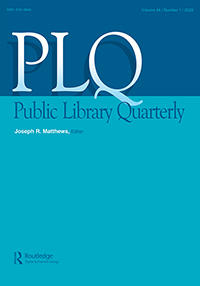
My new article, titled “Public Libraries, Digital Equity Coalitions, and the Public Good” was published this week in Public Library Quarterly. The article features findings from a 2024 study of U.S. public libraries. The goal was to gain a deeper understanding of their role in digital equity coalitions, as the National Telecommunications and Information Administration has recognized that coalitions will play an important role in the success of their Internet for All initiative.

Here is a bit from the abstract:

“This paper seeks to address this gap in the literature by presenting findings from a pilot study of public libraries working with digital equity coalitions in the U.S. The findings from the survey revealed that public libraries support the public good through: (1) convening and leading digital equity coalitions; (2) participating in coalition action planning and advocacy to advance digital equity; and (3) actively centering equity, as opposed to equality, and social justice in their efforts to create and sustain healthy digital equity ecosystems. These findings suggest that if public libraries are to effectively lead and actively participate in digital equity coalitions they must not take a neutral stance to librarianship.”

I hope the findings from the article will be useful to public librarians, digital equity coalitions, policymakers, and others interested in learning more about how public libraries support digital equity through local, regional, and statewide coalitions.

Welcome to the DEAR Lab

The Digital Equity Action Research (DEAR) Laboratory in the School of Information Sciences (iSchool) engages in community-engaged and participatory research to advance digital equity in Illinois and worldwide. We partner with community-based organizations, government agencies, philanthropic organizations, and other entities to advance mutually-beneficial research initiatives that benefit those most impacted by digital inequities.

Digital Equity Action Research (DEAR) Lab
Email: crhines@illinois.edu