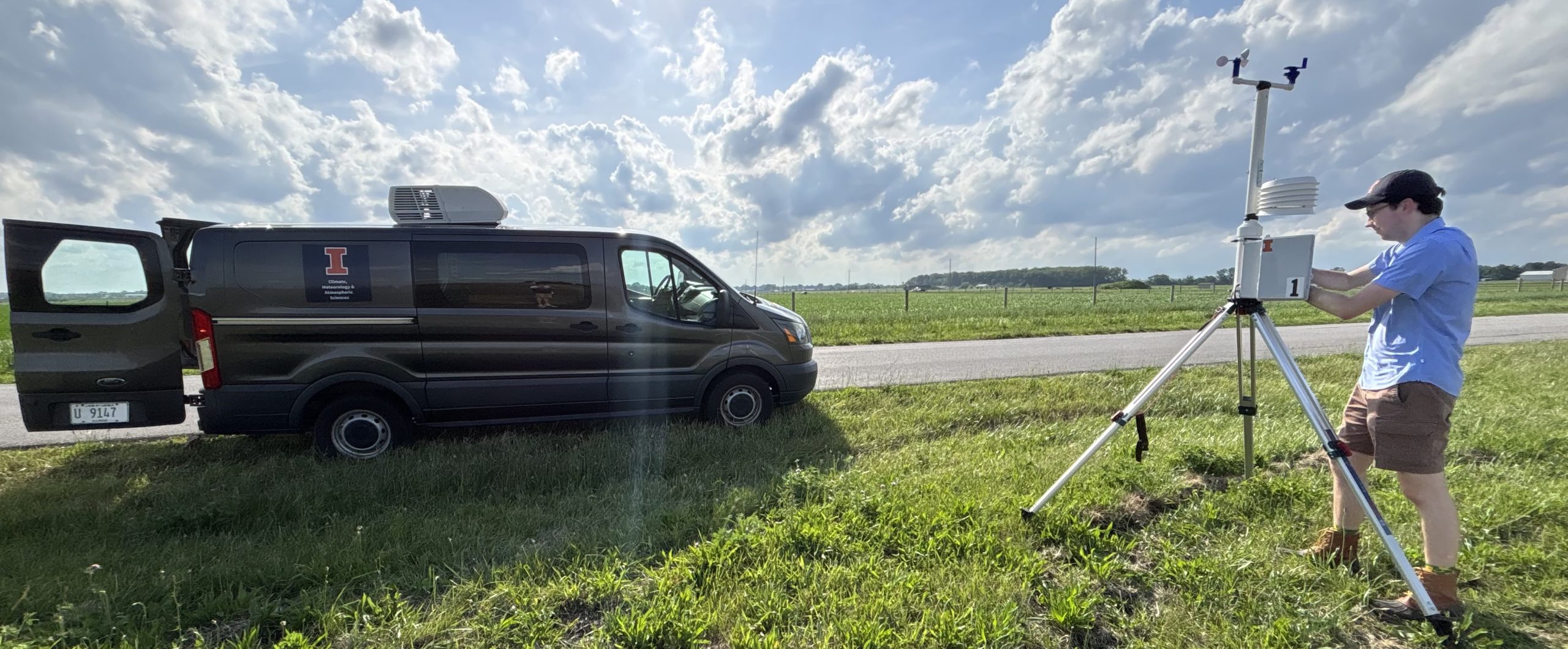
Quickly Deployable Python-Based Instrumentation (QDPI) are a network of deployable tripod-mounted weather stations designed by UIUC CliMAS. Capable of withstanding severe thunderstorms, QDPI can be used to gather insights on any type of impactful weather.
A Low-Cost Solution
While a single research-grade anemometer can cost over $1200 (not including the cost of data loggers and wiring) a complete QDPI station costs less than $400. Most components are sourced from online electronics suppliers while specialty parts, such as the anemometer, are 3D printed following instructions from the NCAR 3D PAWS program. Rather than relying on an expensive data logger, QDPI software runs on relatively low-cost Raspberry Pi computers. This allows us to deploy an entire network of weather stations for a fraction of the normal cost.
Designed to be Flexible
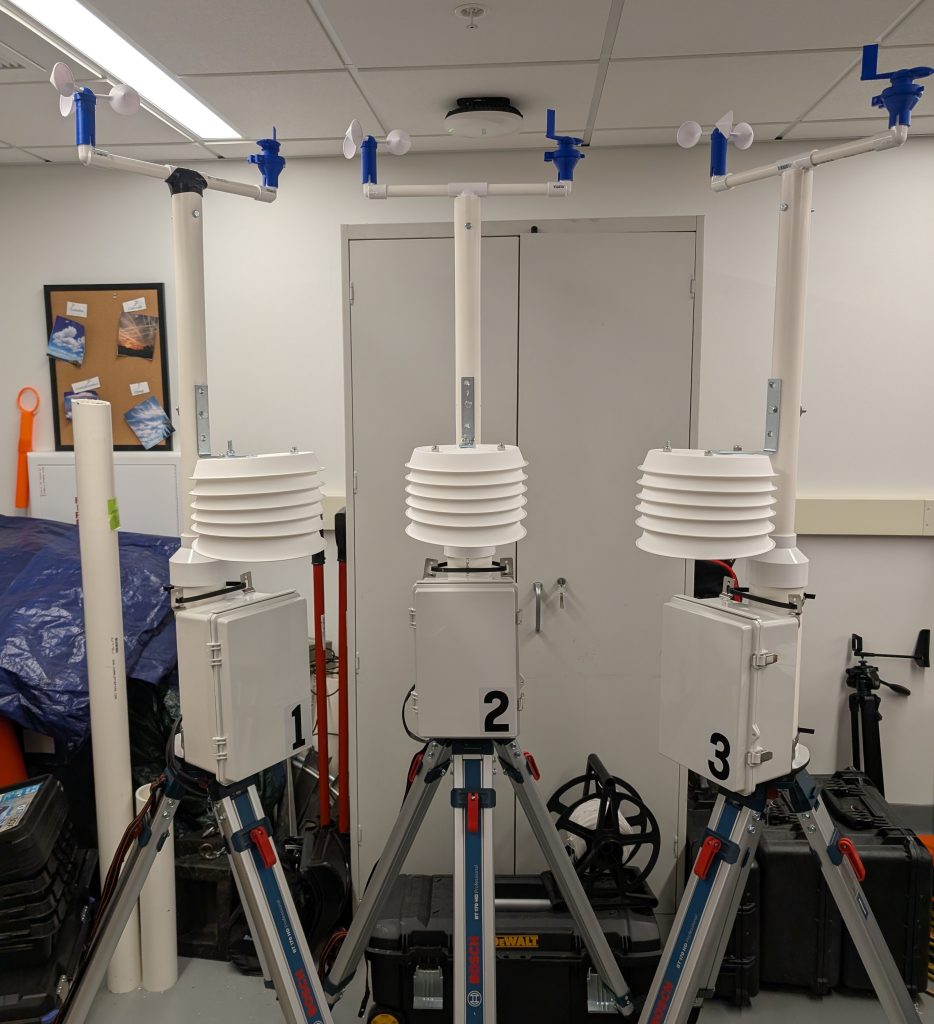
QDPI’s tripod system allows for quick assembly and disassembly in the field, with set up taking less than 3 minutes.
Additional sensors can be easily integrated into the system as needed, thanks to QDPI’s fully customizable Python-based software.
Ready for Use in the Classroom and Beyond
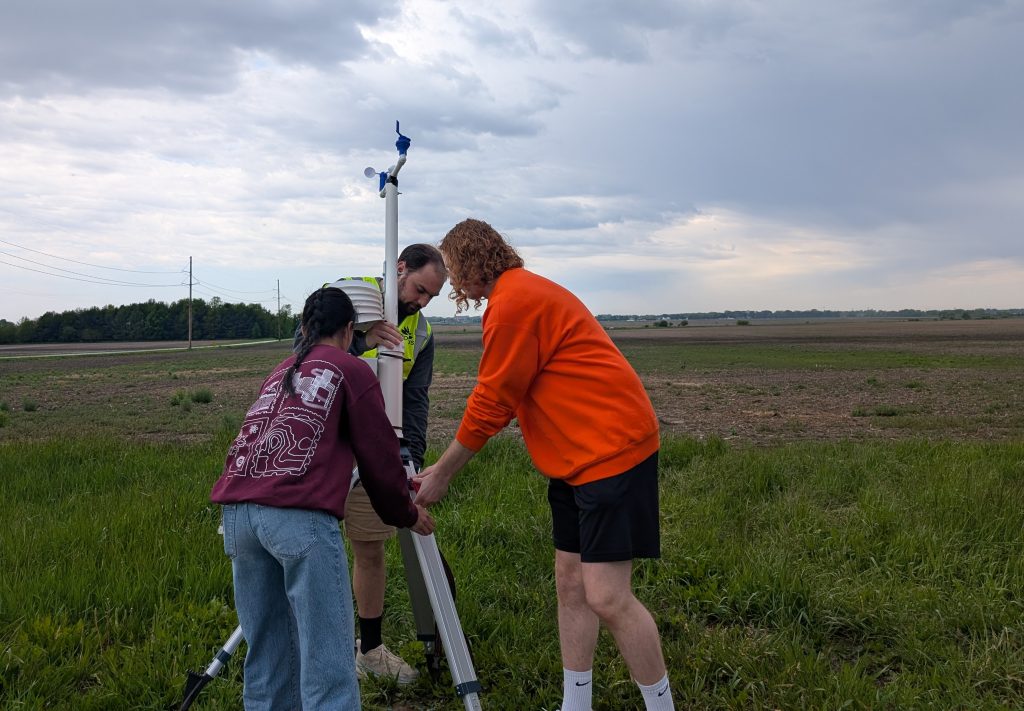
In Spring 2026, two QDPI stations were deployed by CliMAS undergraduate students in ATMS 314 Mesoscale Dynamics to observe severe weather, including a tornado-warned line of storms. Students chose locations for the deployments and used QDPI data as part of their final projects.
In the future, QDPI may also be used in CliMAS instrumentation courses as well as larger research projects.
Providing Real-Time and Recorded Measurements
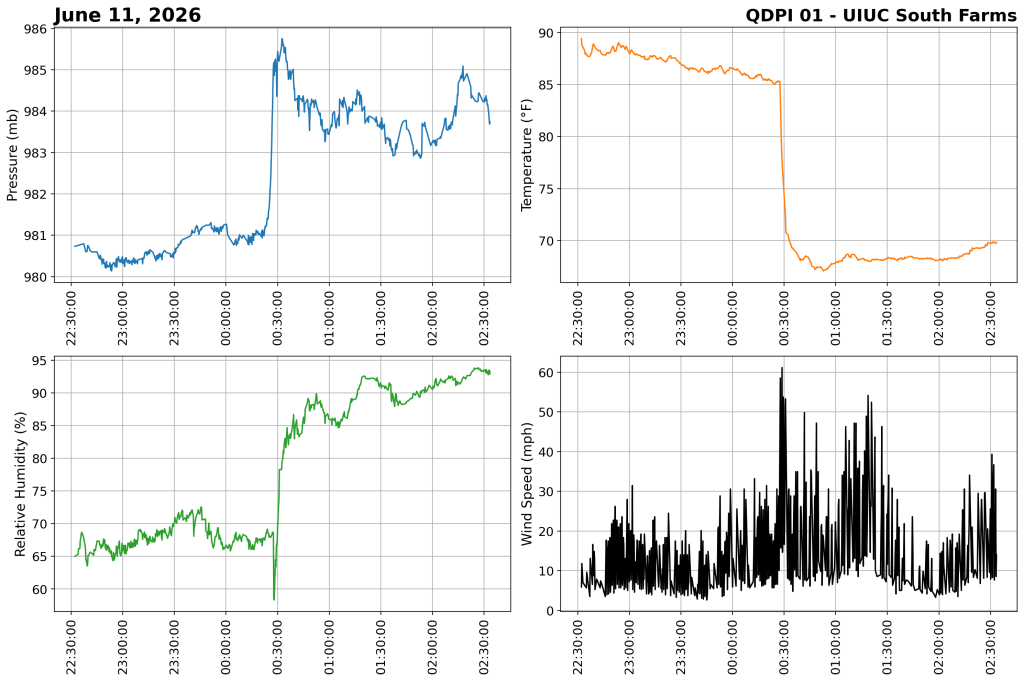
Each QDPI measures wind speed and direction, temperature, humidity, and pressure every 10 seconds and records the data locally to a Raspberry Pi computer. If WiFi is available, QDPI can also transmit a live data feed.
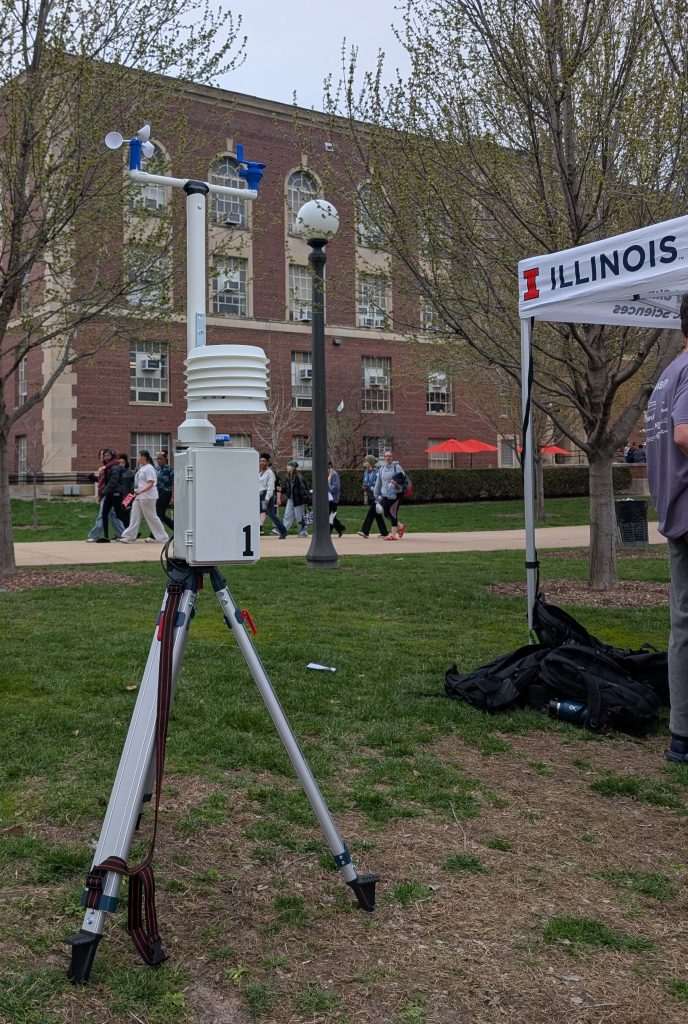
Specifications
Temperature (1.5m): SHT31-D and BMP390
Humidity (1.5m): SHT31-D
Pressure (1.5m): BMP390
Wind Speed (2.25m): NCAR 3D PAWS anemometer
Wind Direction (2.25m): NCAR 3D PAWS wind vane
Data logging and transmission: Raspberry Pi 3B+
Tripod: Bosch BT 170 HD
Operating Time: ~24 hours via a 10,000 mAh battery
Update Frequency: Up to 10 seconds
Want More Information?
Contact Eddie Wolff (ecwolff3@illinois.edu)